
Fungal ear infection(Otomycosis): Symptoms, causes, and how to treat it?
Ear discomfort can be deeply frustrating, especially when standard remedies fail to provide relief. If you are experiencing persistent itching, a feeling of fullness, or unusual discharge, you may be dealing with a fungal ear infection.
Also known medically as otomycosis, this condition occurs when fungi such as Aspergillus or Candida invade the ear canal. While often mistaken for a common swimmer’s ear, a fungal ear infection requires a specific diagnostic approach to ensure the correct treatment is applied and to prevent the condition from recurring.
Dr. Mustafa Kapadia specializes in advanced otology and provides comprehensive care for patients struggling with an infected ear canal. Understanding the distinction between various types of ear issues is the first step toward recovery. Whether you are dealing with a mild ear fungal infection or a more stubborn case of ear fungus, our clinic in Dubai offers the expertise and technology needed to restore your ear health and protect your hearing.
About otomycosis: What is a fungal ear infection?
To effectively manage your recovery, one must first understand what does a fungal ear infection look like and how it differs from other issues. Otomycosis is an inflammatory condition of the outer ear canal. While bacteria cause most ear infections, about 10 percent are caused by fungi.
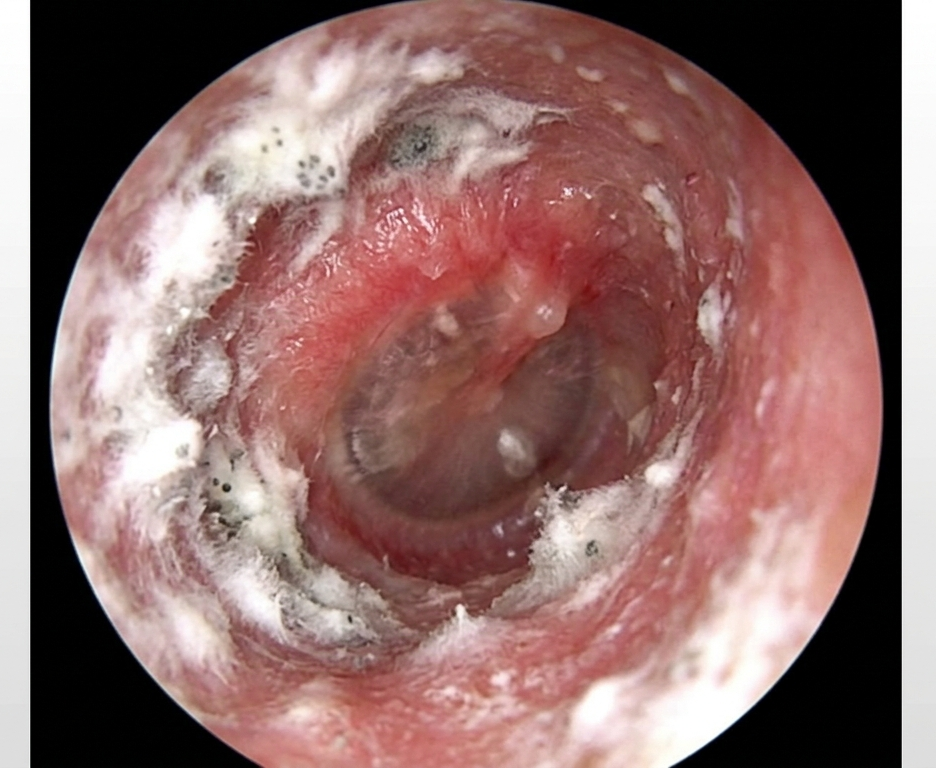
When patients ask what does a fungal ear infection look like, the answer often involves a visible buildup of debris that can appear white, yellow, black, or grey, depending on the specific type of fungus involved.
In many clinical cases, fungal ear infection pictures show a “wet newspaper” appearance or tiny sprout-like structures called hyphae within the canal. This infected ear canal can become quite swollen and painful if the fungus is allowed to proliferate. Because the symptoms can mimic other conditions, seeing a specialist is vital to confirm whether you have a fungal vs bacterial ear infection, as the treatments for these two are entirely different.
Symptoms of a fungal infection in ear
Identifying a fungal infection in ear early can prevent significant discomfort. Unlike bacterial infections that often present with intense pain immediately, an ear fungal infection usually begins with a characteristic itch. Common symptoms include:
- Intense itching (pruritus) deep inside the ear.
- Pain and tenderness in the ear canal.
- A feeling of “fullness” or pressure (aural fullness).
- Redness and swelling of the outer ear.
- Muffled hearing or temporary hearing loss.
- Discharge that may be thick, white, or dark in colour.
If you suspect you have an ear fungus, it is important to avoid using cotton swabs, as these can push the fungi deeper into the canal and worsen the blockage.
Causes: How do you get a fungal ear infection?
A common question patients ask is: How do you get a fungal ear infection in a modern city like Dubai? Fungi thrive in warm, moist, and dark environments, making the ear canal an ideal habitat. You may be wondering how do you get a fungal ear infection specifically; common risk factors include:
- Humidity and heat: Tropical and desert climates encourage fungal growth.
- Swimming: Frequent exposure to water can wash away the protective wax, leaving the canal vulnerable.
- Weakened immune systems: Individuals with diabetes or those undergoing chemotherapy are more susceptible.
- Trauma: Scratches in the ear canal from hearing aids or cotton buds allow fungi to enter.
- Overuse of antibiotics: Chronic use of antibacterial ear drops can kill “good” bacteria, allowing ear fungus to take over.
Many patients also ask: Are fungal ear infections contagious? The answer is generally no. Are fungal ear infections contagious through casual contact? No, because the infection is usually caused by fungi already present in the environment or on your skin that have simply found an opportunity to overgrow.
Complications: Can a fungal ear infection spread?
If left untreated, a fungal infection in ear can lead to more serious issues. A frequent concern is: Can a fungal ear infection spread to other parts of the head? While the infection typically stays localized to the outer ear, it can potentially damage the eardrum (tympanic membrane) and lead to a middle ear infection.
More rarely, patients ask: Can fungal ear infection spread to brain? While extremely uncommon in healthy individuals, in severely immunocompromised patients, a condition called malignant otitis externa can develop.
So, while you might worry can fungal ear infection spread to brain, this is typically only a risk for those with very advanced underlying health conditions. However, the potential for complications is why early ear fungus removal by a professional is always recommended.

Diagnosis: Fungal vs bacterial ear infection
Differentiating a fungal vs bacterial ear infection is critical because using antibacterial drops on a fungal infection can actually make the fungus grow faster. During your consultation, Dr. Mustafa Kapadia will perform an otoscopy to examine the infected ear canal.
He will look for the specific markers seen in fungal ear infection pictures, such as spores or a white, fluffy growth. In persistent cases, a small sample of the discharge may be sent to a lab to identify the exact species of ear fungus involved.
How to treat fungal ear infection?
Knowing how to treat fungal ear infection requires a professional touch. Home remedies are often ineffective and can push the infection deeper. The clinical process for how to treat fungal ear infection usually involves:
- Ear fungus removal: The most important step is professional cleaning, or “micro-suction.” Dr. Mustafa Kapadia will carefully perform ear fungus removal by suctioning out the fungal debris and spores from the canal.
- Topical antifungals: After the canal is clean, antifungal ear drops or ointments are prescribed.
- Acidifying drops: These help restore the natural pH of the ear, making it harder for the ear fungal infection to return.
- Oral medications: For severe or resistant cases of otomycosis, oral antifungal tablets may be necessary.
Learning how to treat fungal ear infection also involves lifestyle changes, such as keeping the ears strictly dry during the healing process using specialized earplugs or a swim cap.
Also Read – Ear infection – Otitis Media vs Otitis Externa
Prevention and ear health
Once you have successfully cleared an infected ear canal, prevention is key. To avoid another fungal infection in ear:
- Dry your ears thoroughly after swimming or showering using a hair dryer on a cool setting.
- Avoid using cotton swabs or any sharp objects in the ear.
- Manage diabetes by regulating your blood glucose.
- Use acetic acid drops if recommended by your doctor after swimming.
Why choose Dr. Mustafa Kapadia for a fungal ear infection in Dubai?
Dr. Mustafa Kapadia is a renowned Ear, Nose, and Throat specialist in Dubai with extensive experience in treating complex cases of otomycosis. He understands that every fungal ear infection is unique and requires a gentle, precise approach to ear fungus removal.
Using the latest endoscopic and microscopic tools, he ensures that the infected ear canal is thoroughly cleaned and treated, reducing the risk of recurrence and protecting your long-term hearing. Book an appointment now.
FAQ's
When viewed through an otoscope, it may look like a collection of white or black dots, or a thick, felt-like material blocking the canal.
With proper professional cleaning and antifungal drops, most infections clear within one to two weeks, though stubborn cases may take longer.
It doesn’t spread through the blood, but you can accidentally transfer the fungi from one ear to the other if you touch an infected ear and then a healthy one.
Professional micro-suction is generally not painful, though you may feel some slight pressure or hear a loud suctioning sound during the procedure.
In severe cases, the inflammation can cause referred pain in the jaw or temporomandibular joint (TMJ).