Ear Bleeding No Pain Explained: Reasons, Symptoms, and When to See a Doctor
It’s common to feel worried if you notice your ear bleeding no pain, especially if it happens suddenly or doesn’t hurt. This can happen after cleaning your ears, an infection, an injury, or changes in pressure. Sometimes, it may point to a more serious problem that needs a specialist’s attention. Dr. Mustafa Kapadia, an experienced ENT surgeon in Dubai, uses advanced diagnostic techniques and personalized care to identify the cause of ear bleeding and provide effective treatment. His goal is not only to stop the bleeding but also to restore ear health and prevent long-term complications.
Why is my Ear Bleeding?
Patients often ask Dr. Mustafa Kapadia, “Why is my ear bleeding?” or “Why is the inside of my ear bleeding?” He often explains to his patients that the causes of ear bleeding can be many, ranging from minor injuries to infections or deeper problems inside the ear. The ear canal and eardrum are sensitive, so even a small irritation can lead to bleeding.
One of the most common causes is ear bleeding after cleaning, which can occur when cotton swabs or sharp objects scratch the ear canal lining. In other cases, blood in ear, blood in the ear canal, or blood coming out of ear may occur due to infection, pressure injury, or eardrum rupture.
Ear Bleeding No Pain- Why?
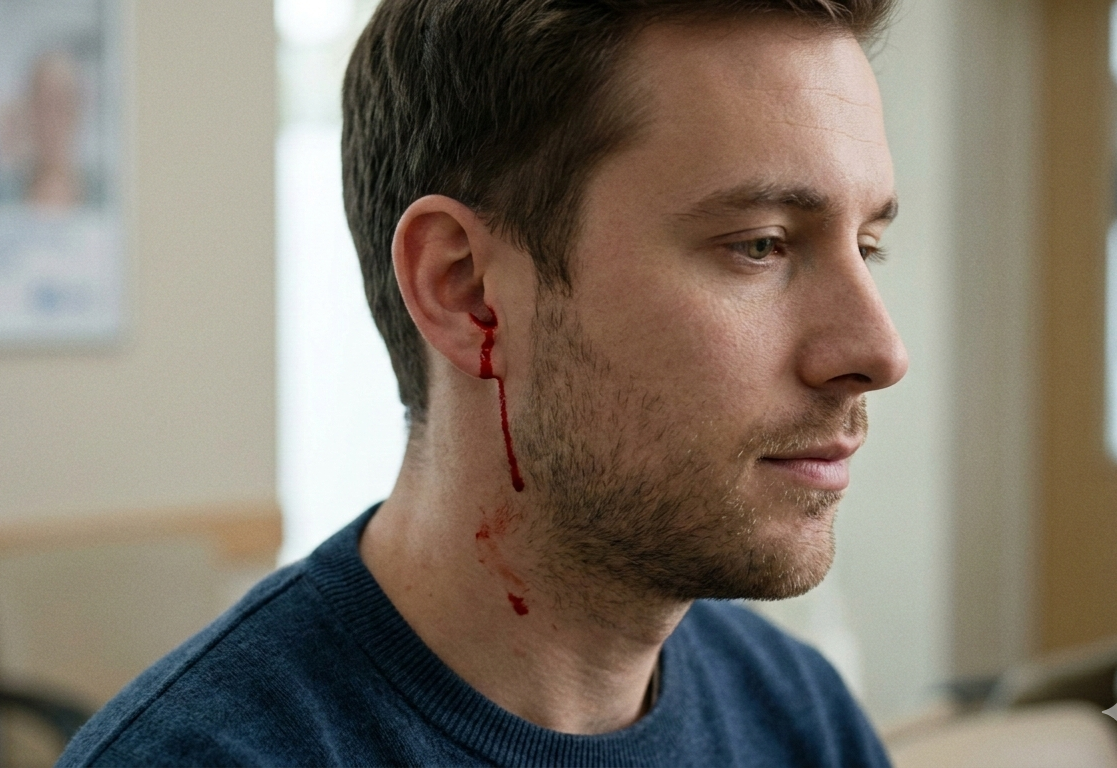
A common concern is ear bleeding no pain. Many people experience painless ear bleeding, which can be confusing and may lead them to delay seeking help. Dr. Kapadia emphasizes that a problem can exist even in the absence of pain. Inner ear bleeding no pain, can happen due to pressure changes, minor injuries, or blood vessel problems, and it is important to have a doctor check it.
Even when there is no discomfort, blood in earwax, dried blood in ear, or repeated blood in the ear canal should not be ignored. Dr. Mustafa Kapadia stresses why is my ear bleeding but no pain. It is a question best answered through careful examination, as silent conditions can still affect hearing and balance.
Common causes of Ear Bleeding
The most common causes for ear bleeding include:
- Ear infection: Infection in the middle ear can build pressure and cause the eardrum to rupture, leading to blood in ear, blood in the ear canal, or blood coming out of ear. Ear infection treatment may be needed.
- Object in the ear: A cotton swab or toy can scratch the ear canal, causing bleeding from ear or a bloody ear.
- Pressure changes: Flying or diving can cause barotrauma, sometimes resulting in inner ear bleeding no pain or painless ear bleeding.
- Torn eardrum: Caused by infection, trauma, loud noise, or pressure changes, leading to blood in earwax or dried blood in ear.
- Head injury: Ear bleeding after cleaning or trauma may signal serious internal injury and requires urgent care.
- Cancer (rare): May cause ear bleeding with hearing loss or discharge.
Tips to stop ear bleeding at home
Many people ask how to stop ear bleeding, especially after discovering blood in earwax or a bloody ear. While minor bleeding may stop with gentle care, Dr. Mustafa Kapadia recommends the following safe steps:
- Avoid inserting anything into the ear.
- Keep the ear dry and clean.
- Gently wipe only the outer ear.
- Avoid further ear manipulation.
If bleeding continues or if you experience hearing changes, dizziness, or persistent discharge, professional evaluation is essential. For those who ask how to stop ear bleeding after cleaning, Dr. Kapadia recommends avoiding further cleaning attempts and scheduling an assessment.

Symptoms you should not ignore
Dr. Mustafa Kapadia advises his patients to seek urgent consultation if any of the following occur:
- Continuous or heavy bleeding from ear.
- Hearing loss or sudden changes in hearing
- Severe dizziness or balance problems
- Fever, severe pain, or foul-smelling discharge
- Bleeding following head trauma
Even ear bleeding no pain should be taken seriously if it recurs or persists.
Why early diagnosis is important in Ear Bleeding
Getting evaluated as early as possible helps identify the reasons for ear bleeding no pain and ensures the condition is treated correctly. Dr. Mustafa Kapadia emphasizes that delaying medical care may lead to more serious complications, including:
- Permanent hearing loss
- Chronic ear infections
- Balance issues due to inner ear damage
A specialist will perform a thorough assessment, which may include an ear exam, hearing test, or imaging scan, to determine why your ear is bleeding and the best treatment plan.
Also Read – What to Know About Crackling in Your Ear?
Treatment options for Ear Bleeding
The treatment plan depends on the underlying cause. Dr. Mustafa Kapadia offers safe, effective care and provides preventive guidance to help avoid recurrence. Options may include:
- Antibiotics for ear infections
- Ear drops to reduce inflammation and promote healing
- Surgical intervention for severe injuries or a torn eardrum
- Removal of foreign objects (such as a stuck cotton swab) under professional care
If you’re wondering why is my ear bleeding, especially if it’s painless ear bleeding or inner ear bleeding no pain, seeking early evaluation with Dr. Mustafa Kapadia can prevent complications and restore ear health.
Why choose Dr. Mustafa Kapadia
Dr. Mustafa Kapadia uses a thorough, patient-centered approach to identify the exact source of ear bleeding. With advanced tools such as otoscopy and endoscopic ear examination, he evaluates ear canal injury, infection, eardrum perforation, and deeper ear disease. Treatment is tailored to the cause, ranging from medical care to surgical intervention when needed.
His focus extends beyond stopping the bleeding to restoring ear function and preventing recurrence. If you notice blood in the ear canal, blood coming out of ear, dried blood in ear, ear bleeding no pain, unexplained painless ear bleeding, or ear bleeding with no pain, prompt consultation is essential. Early treatment helps prevent complications and protects long-term hearing health.